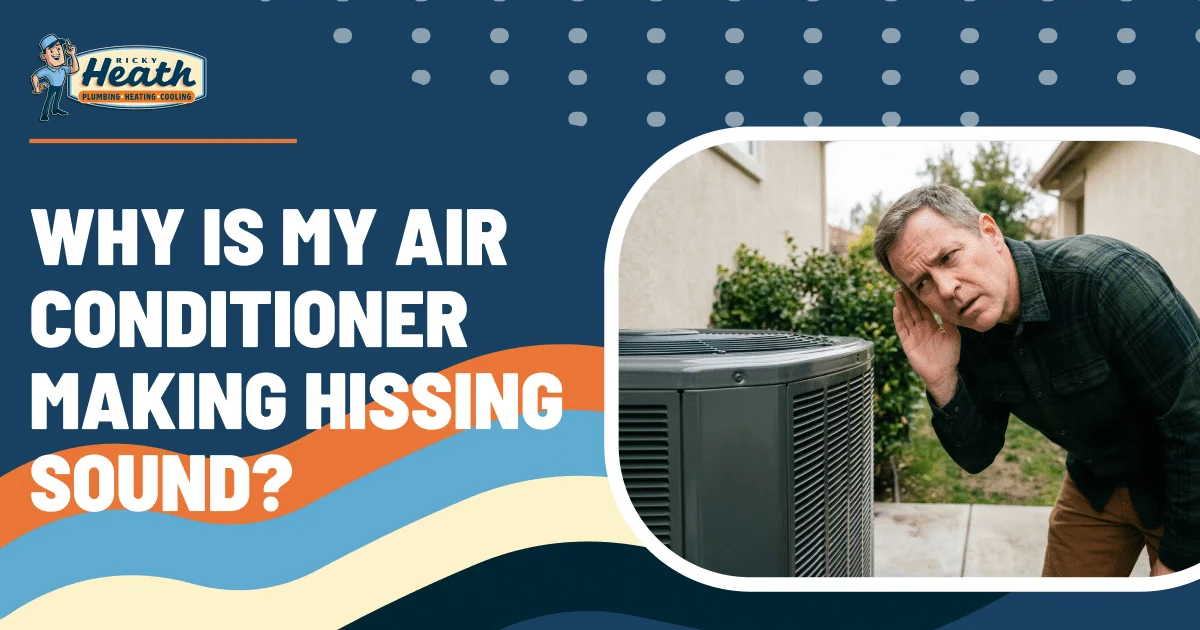
Air conditioners typically run quietly with a low hum, so persistent or loud hissing is a valid cause for concern. An AC making hissing noises typically happens when a component in the system is damaged or faulty, especially when Macon's intense summer weather strains equipment and highlights underlying problems. Learn why your air conditioner is hissing, how to troubleshoot, and when to call an HVAC professional from Ricky Heath.
Key Takeaways
- An AC unit making hissing noises often signals problems with refrigerant, airflow, or mechanical components.
- A continuous hissing noise coming from AC equipment may indicate refrigerant leaks, compressor pressure imbalance, or expansion valve issues.
- If the AC unit is hissing and the fan isn't spinning, the system may have a failed capacitor that prevents the condenser fan from operating.
- Professional inspection identifies the source of the sound and prevents compressor damage, energy waste, and cooling failure during Macon’s hottest months.
What Causes an AC to Make a Hissing Noise?
Several underlying factors can cause hissing noises from AC components, usually relating to refrigerant pressure or airflow. Some sounds occur briefly during cooling cycles and are normal, while others indicate more complex problems.
Normal expansion valve noise
The expansion valve regulates refrigerant flow between the high-pressure and low-pressure sides of the system. During startup or shutdown, refrigerant pressure equalizes across this valve and can create a short hissing sound. A few seconds is normal, but continuous noise or loud suggests imbalance pressure or a valve malfunction.
Refrigerant leak
A leak allows pressurized refrigerant to escape through pinholes in coils or refrigerant lines, sometimes creating a steady hissing noise while the system runs. Reduced cooling performance, ice buildup on the evaporator coil, longer cooling cycles, and higher energy consumption frequently coincide with refrigerant leaks.
High compressor pressure
The compressor pressurizes refrigerant so it can release heat outdoors. If you hear an AC compressor hissing sound, it's potentially because of refrigerant pressure that's charged above normal levels. Excess pressure may overheat and damage the compressor or cause safety shutdowns.
Failed capacitor (fan not spinning)
The outdoor condenser fan pulls heat away from the condenser coil. If the capacitor fails, the motor can't start and the fan won't spin when the compressor runs. In turn, heat builds up in the outdoor unit and triggers the pressure relief valve, resulting in hissing sounds.
Faulty or stuck expansion valve
Expansion valves meter refrigerant pressure with precise adjustments, but a stuck or malfunctioning valve can disrupt normal balance. Refrigerant may pass through too quickly, become restricted, and push into lower-pressure spaces, causing a continuous hissing sound.
Leaky air ducts
Air ducts with loose joints or torn insulation allow conditioned air to escape before it distributes evenly throughout your home. As this air escapes through narrow openings, it may produce hissing or whining sounds.
Blocked or closed vents
Supply vents distribute cooled air throughout the home, and if you close or obstruct vents, the pressure in the duct system becomes unbalanced. This problem also pushes air through small gaps or other openings to cause hissing sounds.
Malfunctioning reversing valve (heat pumps)
A worn or partially stuck valve can release pressurized refrigerant unevenly during operation. Heat pumps use a reversing valve to change the direction of refrigerant between heating and cooling modes, so you may hear intermittent hissing during mode changes or during long cooling cycles if your valve has malfunctioned. Heat pump reversing valves are more likely to malfunction if your heat pump is old and due for replacement.
Why Is My AC Making a Hissing Noise in Macon’s Summer Heat?
Macon summers combine intense heat and humidity, which can strain your AC system and cause it to make hissing sounds. High humidity makes this more likely, since it can make indoor ambient temperatures feel hotter than they really are and prompt homeowners to turn their thermostat even lower.
These conditions push AC systems to run extended cooling cycles during July and August, often exacerbating otherwise minor inefficiencies and potentially accelerating wear. Specifically, longer cooling cycles increase refrigerant pressure and strain worn components such as valves, capacitors, and refrigerant connections. Macon is also prone to thunderstorms throughout the summer, and surges from black-outs may stress capacitors and other electrical components.
At Ricky Heath, our technicians work throughout Macon and the surrounding communities. Our local expertise allows us to identify and address these residential AC system problems accurately during peak cooling season.
How to Fix AC Hissing Noise Issues?
Since noises can stem from several potential problems, fixing hissing noises coming from your AC requires careful inspection. There are a few troubleshooting strategies you can try to determine whether the fix is within typical DIY limits or if it requires an HVAC technician for a closer look and professional AC repair. Try these troubleshooting steps:
- Step 1: Replace dirty air filters.
- Step 2: Confirm that your vents are open and unobstructed.
- Step 3: Inspect the outdoor unit for visible damage, such as bent condenser fins, corroded refrigerant lines, or debris inside the outdoor cabinet.
- Step 4: If the outdoor unit stopped mid-cycle, a tripped breaker may have interrupted power to the condenser fan or compressor. Resetting the breaker may also reset the AC and restore operation if the trip resulted from an isolated electrical surge.
If these steps don't resolve the hissing sounds, refer to an HVAC technician at Ricky Heath for AC tune-ups or repairs. Any remaining problems not addressed but DIY troubleshooting are likely to involve refrigerant, electrical components, or other complex parts and require professional expertise.
For example, refrigerant leaks require sealing damaged components and recharging the system with the correct refrigerant level, and technicians must hold the correct Environmental Protection Agency (EPA) certifications to safely handle refrigerant. Technicians also test capacitors, fan motors, and compressor performance during inspection.
Should I Turn Off My AC If It’s Making a Hissing Noise?
Turn your AC system off if the hissing noises are loud or continuous or if cooling performance drops. Since persistent noise often indicates underlying issues, continued operation can damage internal components. Shutting the unit down limits compressor strain and prevents overheating.
If cooling performance hasn't changed and the sound is brief or isolated, you likely don't have to turn the system off. In case you're unsure, contact Ricky Heath Plumbing Heating & Cooling to speak to licensed HVAC technicians throughout Macon for quick support, diagnosis, and repairs.
Schedule AC Repair in Macon Today
A persistent hissing noise coming from your AC equipment may signal refrigerant charge issues, restricted airflow, compressor stress, or other problems that require professional servicing.
At Ricky Heath, our HVAC team provides lasting AC solutions for homeowners throughout Macon. Our team responds quickly during peak summer conditions to ensure your cooling system operates at peak performance when you need it most. Contact us today to schedule AC repair with Ricky Heath.