A backed-up sewer can allow water and sewage into your home, causing extensive damage and health concerns. At Ricky Heath Plumbing, Heating, and Cooling, our licensed plumbers are available for sewer line inspections, repairs, maintenance, and replacements. We’ll find the best, most cost-effective solution to keep your sewer line clear and your water running smoothly.
Read on to learn what causes sewer backups, common signs of sewer line problems, how to prevent them, and when to contact the professional plumbers at Ricky Heath for help.
What Is a Sewer Line Backup?
A sewer line backup occurs when wastewater backs up into the shower drain, sink, toilet, or other drains, rather than being transported away from your home. The main sewer line is usually outside or at the lowest point, such as a basement, garage, or crawlspace. It transports water to a septic tank or your municipality’s sewage system, where it goes on to be treated and returned to the water supply. If something stops the water flow, it can back up into your home.
How Do Sewer-Line Backups Happen?
What causes sewage backup? Typically, sewage backs up when pipes become clogged, blocked, collapsed, or damaged. This interrupts the flow of wastewater, leaving it with nowhere to go except back up the sewer line and into your home.
What Causes Sewer Backups?
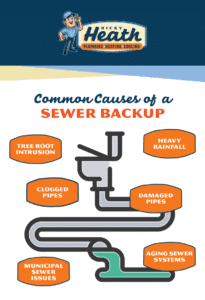
Wondering what causes sewer backup in your basement or laundry room? The following are some of the most common causes.
Clogged or blocked pipes
One of the most common reasons for sewer backups is a clog or a blockage in your pipes. Hair, grease, soap scum, food debris, paper towels, baby wipes, and sanitary products can all cause clogs because they don’t break down in water. A Ricky Heath plumber will usually start with a camera inspection of your pipes to find blockages and other damage, which helps them determine how to fix the issue.
Damaged pipes
Pipes crack, break, or collapse as shifting soil and natural wear and tear cause damage. In Georgia, the clay soil expands and contracts, putting additional pressure on the pipes. Eventually, this compounded damage can lead to a pipe failure, preventing wastewater from exiting the sewage system and causing a backup. This can also cause further clogs and blockages, exacerbating the problem over time.
A plumbing professional will inspect your sewage pipes for damage and help you decide whether it’s best to repair or replace them. In many cases, replacement is the better option because you can install more durable materials to avoid future issues.
Tree root damage
A common reason for sewer line blockages and backups is tree root growth. Georgia trees with the most aggressive root systems include oaks, maples, sycamores, and magnolias, but all tree roots naturally seek out moisture and will grow towards sewer lines. They can grow into even the smallest gaps in your line, breaking them open or collapsing them.
Tree roots are a bigger concern for older Georgia sewage systems that still use clay piping, but any material can be damaged with enough time. Your professional plumber will inspect the pipe and remove tree roots with hydro-jetting or root cutting, replacing the pipe as needed.
Heavy rain
Georgia is a high-risk area for heavy rains and flooding, which may cause sewer backups. Excess rainfall can overwhelm public sewer systems, causing the additional water to flow back into your home. This type of sewer backup is usually temporary and normally subsides once the rain stops. However, it may still cause severe water damage and potentially expose you to hazardous sewage.
If your area gets a lot of rain, contact an expert to install a sump pump or backflow valve. These devices prevent water from flowing back into your home via the sewer lines, protecting you from future sewage backups.
Municipal sewer problems
Sewage backups might not be in your control. If your municipal sewage system has a failure of some kind, it could lead to wastewater and sewage flowing back into your home. If you think you’re dealing with a sewage backup caused by public sewer issues, you’ll need to report it to your local water department. A plumbing professional can also help you prevent future issues with municipal backups by installing a backflow valve.
Aging sewer systems
Aged plumbing may crack, break, or collapse. This is a particularly big concern for Macon-Bibb County sewage systems built before the 1970s because these systems often have clay or cast-iron pipes. However, even modern PVC sewer lines in new builds in Barrington Hall or the rebuilds in Downtown and East Macon have a finite lifespan, after which point the material begins to degrade.
Warning Signs of Sewer Backup
There are a few ways to tell if your main sewer line is clogged or backed up, including:
- Toilets and drains overflowing with water.
- Sewage odors are coming from drains.
- Flooding around the home.
- Persistent gurgling sounds coming from drains.
- Bright green grass outside (caused by fertilization from human waste).
- Multiple simultaneous fixture clogs.
- Raw sewage backing up into drains, fixtures, and basements.
What To Do When You Suspect a Sewer Backup?
If you’re dealing with a sewage backup, it’s recommended to leave the house. Exposure to sewage is dangerous. The bacteria and viruses it contains can harm you and your family. Stop using water, turn off the electricity if it's safe to do so, then contact a local plumber for assistance. At Ricky Heath, we offer fast responses for plumbing emergencies. We’ll inspect the sewer line, find the cause of the issue, and fix it quickly for a long-lasting solution.
How To Prevent a Sewer Backup in Your Georgia Home
Sewer backups are expensive and unpleasant. Here are a few ways to help prevent this problem from occurring in your home:
- Schedule proactive sewer line inspections.
- Never pour grease or oil down drains.
- Only flush human waste and toilet paper down the toilet.
- Replace old or failing plumbing.
- Maintain your yard and keep trees and shrubs away from your sewer line.
Contact Ricky Heath for Reliable Plumbing Solutions
Working with a trusted plumbing company like Ricky Heath gives you the peace of mind that comes with being protected. Our skilled plumbing professionals are proud to go the extra mile for our customers.
Whether you’re looking to proactively protect your home or address an ongoing sewer emergency, we’re here to help. Contact us today to book a repair service or a sewer line inspection.
Frequently Asked Questions
How often should my sewer line be inspected in an older home?
If you have an older home, it’s best to have it professionally inspected every one or two years. This may help you avoid future problems, such as sewer clogs or pipe collapse.
Does homeowner’s insurance cover a sewer backup?
Most general homeowner’s insurance policies don’t cover sewer backups. You may need to purchase an additional rider policy for this type of coverage.
Can I fix a sewer backup myself?
No. Sewer backups should always be handled by licensed plumbers. DIY fixes put you at risk of contacting dangerous bacteria, injuring yourself, or further damaging your plumbing system.
The post Common Causes of Sewer Backups and How to Prevent Them appeared first on Ricky Heath Plumbing Heating & Cooling.