
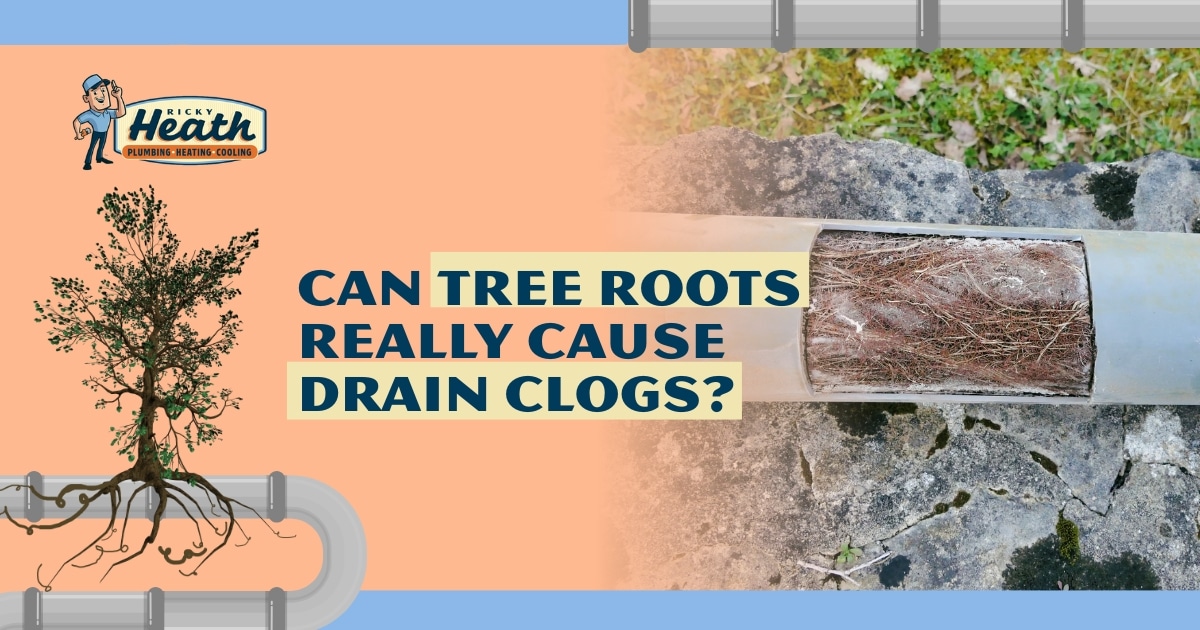
Macon, GA, is home to a wide variety of trees, including thousands of beautiful cherry blossom trees that bloom in spring. Unfortunately, if trees are planted near your underground plumbing system, they can cause serious damage to the pipes. In fact, along with grease and mineral buildup, tree roots are one of the top reasons homeowners in Macon-Bibb County experience drainage problems.
If you’re concerned about tree roots clogging your drains, the experienced team at Ricky Heath Plumbing, Heating, and Cooling is here to help with expert sewer and plumbing services. We focus on care, speed, and quality when dealing with tree roots in drains. With our full range of sewer and drain services, we’ll find the most cost-effective solution to your plumbing issue.
Signs You May Have Tree Roots in Your Drains
Your drains can become clogged due to a variety of reasons, so how do you know if tree roots are the culprit? Some signs you have tree roots in your sewer line may include:
- Slow drains: Tree roots can grow into your pipes, causing blockages in your sinks, bathtubs, and drains. If your drains are running slowly, it may mean tree roots are blocking the sewer line.
- A drop in water pressure: Cracks in underground water lines caused by tree roots may lead to low water pressure as water escapes the plumbing system before reaching your faucet or showerhead.
- Wet patches and sinkholes: Cracked or leaking plumbing caused by tree root intrusion can create visible wet patches or even sinkholes on your lawn. Avoid the area, and call Ricky Heath as soon as possible for a quick diagnosis and plumbing repair.
- Foul odors: If tree roots damage your sewer lines, it can lead to unpleasant odors inside and outside of your home. Unpleasant odors from your drains may indicate a major sewer line or plumbing blockage that requires professional repairs.
- Gurgling sounds: If tree roots are trapping air in your pipes, it can cause gurgling sounds as water flows past.
- Bright green grass: Extremely bright green patches of grass in your yard are often caused by leaking sewage that acts as fertilizer. These bright patches in your lawn are a sign that something, possibly tree roots, has damaged the sewer line.
- Pest infestations: Areas where roots have entered your plumbing system may also let insects and rodents in. An increase in pest activity may indicate root intrusion.
- Wastewater backups: Blocked pipes mean there’s nowhere for water to go after you drain the bathtub or flush the toilet. This causes water to flow back into your home, creating unsanitary and uncomfortable conditions.
Are Tree Roots in Drains Common in Macon, GA?
Tree root intrusions are one of the most common drain issues in the Macon area. Aging sewer systems in Macon’s historic neighborhoods are especially at risk for tree root problems. Older plumbing systems may be composed of outdated materials such as brick, terracotta clay, galvanized steel, cast iron, or Orangeburg (a material made from wood pulp and tar pitch). While it’s possible for any material to crack or leak, older pipes are more vulnerable to even the smallest tree roots.
How Tree Roots Damage Sewer Lines
In most cases, tree roots enter your drain or sewer line through gaps or cracks in the pipes. Here are some ways tree roots could end up in your drain or sewer line:
- When water flows through your sewer pipes, oxygen, moisture, and nutrient-rich vapors escape through cracks and joints, attracting nearby tree roots.
- Even the smallest crack or a loose joint in pipes can release sufficient moisture and nutrients that attract tree roots.
- As soon as the roots find the source of the moisture and nutrients, they’ll start to grow in the direction toward your pipes, slowly filling any cracks or gaps with more roots.
- Once tree roots get into your sewer or drain line, they’ll continue to grow larger and expand, causing more damage and creating major blockages that could require a complete water or sewer line replacement.
Tree roots can grow quickly in sewer pipes and usually start spreading within a few weeks or months, sometimes in as few as 30 days.
How To Know if Tree Roots Are Causing Drain Problems
Along with tree roots, many different things can cause a sewer line clog, including:
- Flushing the wrong materials down the toilet.
- Grease and oil buildup.
- Ground movement damaging the pipes.
- Sagging, or “bellied”, sewer lines.
The easiest way to tell if you need professional drain cleaning or repair is to contact an experienced plumber in your area. Ricky Heath plumbers are skilled in finding the source of everything from septic tank backups to foul smells in your yard. We’ll use a camera to inspect the pipes and identify the source of the problem to create a customized solution for your drain issues.
How We Remove Tree Roots From Sewer Lines in Macon, GA
If you suspect that you already have tree roots clogging your drain or sewer line, or if your sewer line is completely blocked, there are a few effective drain cleaning and repair methods to remove them.
Mechanical auger
Our licensed plumbers use a special drain cleaning auger with a root-cutting head to physically cut and remove roots from your drains, pipes, or sewer line. This method should be used only by an experienced, trained professional.
Hydro jetting
A specialized method called hydro jetting uses high-pressure water jets to destroy and remove tree roots. Using this tool is also a great way to remove any leftover or excess debris remaining in your pipes after we use the mechanical auger.
Trenchless pipe lining
Cured-in-place pipe lining (CIPP) is a trenchless method that can be used to repair your existing pipes without digging up your yard. A special epoxy liner is applied to the inside of your pipes, and once it’s fully cured, it acts as a new pipe. This durable pipe liner seals gaps and openings, preventing tree roots from entering and preventing future leaks.
How To Prevent Tree Roots from Entering Your Sewer Line
The best long-term solution for tree roots in sewer lines is being proactive with preventative measures. Regular sewer line and plumbing inspections help you find issues early, and planting trees far away from your sewer lines helps prevent the roots from getting into your drain or pipes. There are also physical barriers you can install to control the direction tree roots grow underground.
If your plumbing is older, you may want to consider replacing it with a modern plumbing system, especially if you’re experiencing frequent clogging, costly repairs, or consistently low water pressure.
Contact Ricky Heath for Drain and Sewer Services
If you suspect that tree roots are growing into your drains, pipes, or sewer lines, don’t ignore it. The experienced team at Ricky Heath Plumbing, Heating, and Cooling is available to help you solve this common issue at your Macon area home. Contact us today to schedule our professional drain and sewer services.
