
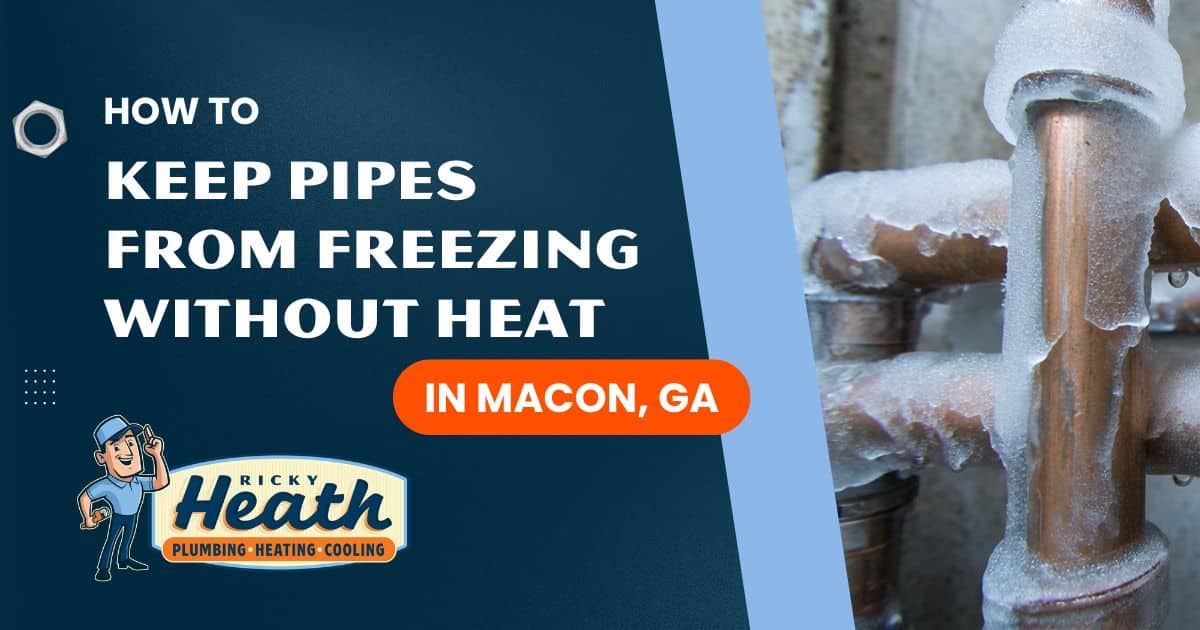
While Macon is known for mild winters, temperatures can drop below freezing overnight with little warning and cause homeowners to wake up to frozen pipes. Learn how to keep pipes from freezing without heat to avoid plumbing emergencies.
Key Takeaways
- Pipes can freeze in Macon during brief cold snaps due to exposed plumbing, crawlspaces, and older insulation common in many neighborhoods.
- Slow down freezing by promoting airflow and sealing drafts.
- Power outages increase risk, but shutting off water and draining lines reduces the risk of ice forming.
- Early warning signs like reduced flow or frost on pipes signal a need for immediate action or professional service.
Why Pipes Can Freeze Even in Mild-Climate Areas Like Macon
Winters in Macon are generally mild, so many houses don’t have the same protection against cold as homes in areas with harsher seasons. However, Macon temperatures can quickly drop overnight, and cold snaps pose challenges for your plumbing system since they create sustained periods of low temperatures in unprotected piping areas.
Even at 32°F, pipes may freeze in as few as four hours, but the severity, speed, and extent of freezing depends on several factors beyond outdoor temperatures. Pipe material, location, and insulation, for instance, determine how vulnerable pipes are during freezing temperatures.
Many Macon homes have pier-and-beam foundations with exposed plumbing beneath the home, and older plumbing systems often lack insulation. High humidity in winter and poor insulation in older Macon homes further increase the risk of pipe freezing, especially if the power and heating go out.
Steps to Keep Pipes From Freezing Without Heat
Use these preventive steps before temperatures drop below freezing to protect your pipes from Macon’s occasional cold snaps.
1. Let your faucets drip to keep water moving
A small, steady drip keeps water moving through the line, which reduces the risk of ice building up inside. Turn on faucets that are most likely to freeze, such as those in exterior walls or far from the main water line.
2. Open cabinets under sinks to promote air circulation
Cabinets can trap colder air around supply lines, especially for plumbing on exterior walls. By leaving cabinet doors open, you allow the warm air of your home to occupy the under-sink area airflow and bring the temperature of these lines up.
3. Insulate exposed pipes in unheated areas
Older neighborhoods in Macon, such as Shirley Hills, Bellevue, and Vineville, often have minimal or outdated pipe insulation compared to new building standards. Available in foam, fiberglass, rubber, and other materials, pipe insulation slows heat loss and is mostly used to protect pipes in exposed and unheated areas. Homeowners may choose to install insulation for exposed, accessible pipes, but a plumber can provide greater insight into how to optimize insulation and insulate pipes in outer walls.
4. Seal drafts around doors, windows, and foundation gaps
Cold air entering through gaps in your home lowers temperatures around plumbing quickly. Use weatherstripping, caulk, or foam sealant where appropriate to seal cracks around doors, windows, crawlspace vents, and the foundation to limit cold airflow. This step also improves overall energy efficiency, reduces strain on heating equipment, and helps stabilize indoor temperatures during cold snaps.
5. Close garage doors if plumbing runs through walls nearby
Most garages stay colder than the rest of the home during cold conditions, and shared walls often include plumbing that feeds into the kitchen, laundry, or hose bib. Keep the garage door closed to stabilize temperatures and reduce exposure to cold air at shared walls.
What to Do If You Have No Power During a Freeze
Power outages raise the risk of frozen pipes because they prevent HVAC equipment and well pumps from working. Prevent pipes from freezing conditions by managing water in potentially vulnerable pipes and by stabilizing airflow and temperature in your home.
Shut off the main water supply if temperatures are expected to drop low
Turn off the main water supply to prevent pressurized water from feeding into frozen sections of pipes. Once shut off, open faucets to relieve pressure and allow the pipes to drain. Knowing the valve location before winter makes this step faster and less stressful during an outage. In most Macon homes, you can find the main shutoff valve near the water meter, crawlspace entry, or where the line enters the house.
Open all interior doors to keep indoor air circulating
Interior doors can trap warm air in one room and allow cold pockets to form in others, particularly in utility closets and bathrooms where pipes are located. Open interior doors to allow the warm air to mix throughout your home and stabilize temperatures.
Drain outdoor hose bibs and supply lines
Outdoor hose bibs are most exposed to weather conditions and are most at risk of freezing. Disconnect hoses, then open the hose bib to drain any remaining water. If you have a shutoff for outdoor lines inside the home, close it and open the exterior spigot to drain the section between the shutoff and the faucet.
Warning Signs Your Pipes Are Starting to Freeze
Several factors act as warning signals that your pipes have begun to freeze and are at risk of bursting. Recognizing these signs early allows you to take preventative steps before the freezing escalates:
- Cracked pipes: Visible cracks or splits indicate ice expansion has already stressed the pipe.
- Reduced or no flow from faucets: Weak flow or a faucet that stops running usually points to an upstream section of frozen pipes.
- Frost on pipe exterior: Visible frost on an exposed pipe means the pipe wall is already at freezing temperature.
- Leaks or pooling water: Water collecting under a sink, in a crawlspace, or along a baseboard can signal shifts in pressure due to ice.
- Water spots on ceilings or walls: New discoloration can appear when a supply line in an exterior wall or ceiling cavity begins leaking from pressure buildup.
- Gurgling sounds: Unusual gurgling during faucet use can happen when ice partially blocks the flow and forces water and air through a narrowed path.
- Bulging pipes: A pipe that swells in one section often indicates ice expansion inside the line and requires urgent attention to keep it from bursting.
Schedule Plumbing Maintenance and Repairs With Ricky Heath
At Ricky Heath, our technicians understand local housing styles, crawlspace layouts, and insulation challenges common across Bibb County. For professional guidance on how to keep your pipes from freezing without heat, or if you notice early warning signs during a cold snap, schedule a service with our team. Contact us at Ricky Heath to take advantage of the local insight, technical experience, and clear communication offered by our team.
Frequently Asked Questions
How long can pipes stay frozen without bursting?
Pipes can freeze for several hours or even days. Bursting happens when ice traps water and increases pressure, often during partial thawing rather than while the pipe remains fully frozen.
Are vacant homes more likely to experience frozen pipes?
Unoccupied homes are more likely to experience frozen pipes since there’s no movement in the pipes. Many homeowners also turn their heat off when they’re away, leaving their pipes vulnerable to freezing.
How does the humidity in Macon affect freezing pipes?
High humidity increases condensation around cold pipes, which accelerates heat loss. Damp crawlspaces and enclosed areas cool faster, allowing pipes to reach freezing temperatures more quickly than in dry environments.
